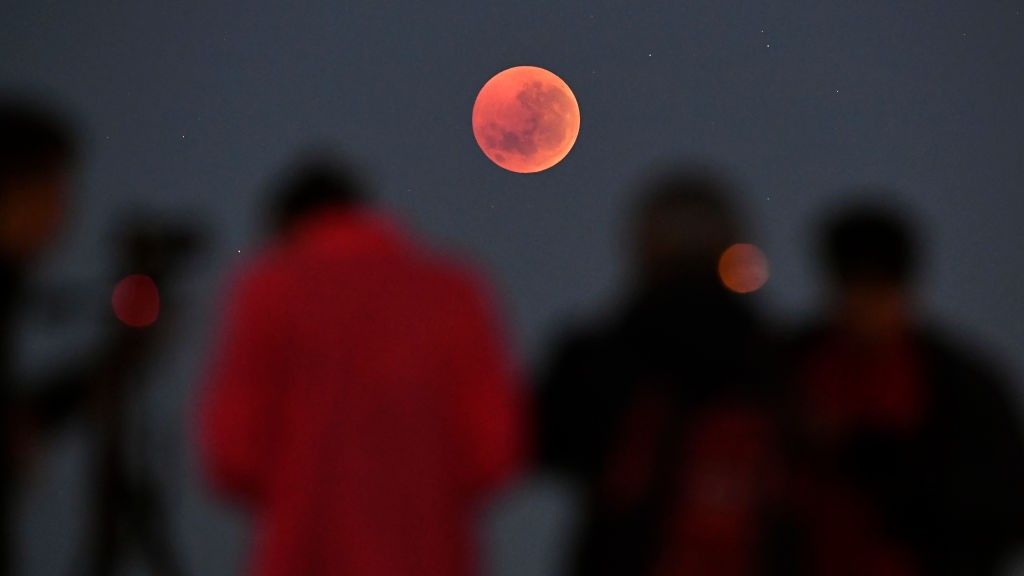
March 2026 Total Lunar Eclipse Brings Blood Moon to North America and Beyond
A dramatic blood moon will grace the night sky in early March 2026, offering a stunning celestial display for millions of skywatchers across North America, Australia, New Zealand, and parts of eastern Asia. This total lunar eclipse will turn the moon a deep reddish hue, a phenomenon that occurs when Earth passes directly between the sun and the moon, casting its shadow across the lunar surface.
The event, set to unfold in the early morning hours of March 3, will be visible to billions of people within the eclipse's path, weather permitting. The best viewing conditions will be found in the western half of North America, Australia, and the Pacific region. For those in darker, open areas with clear skies, the experience will be especially breathtaking as the moon transforms from its usual bright silver to a coppery red.
During the eclipse, the moon will spend 58 minutes in totality, fully immersed in Earth's shadow. This phase will begin at 6:04 a.m. Eastern Standard Time (1104 GMT) and end at 7:02 a.m. EST (1202 GMT). The exact appearance and timing of the eclipse will vary depending on your location. For instance, in New York, observers will see the moon turn red during totality, but the moment of maximum eclipse will occur after the moon has already set below the horizon.
Lunar eclipses are completely safe to watch with the naked eye, unlike solar eclipses, which require special eye protection. As the event progresses, viewers will witness a gradual transformation, with Earth's shadow slowly sweeping across the moon's surface. The effect is similar to watching all the phases of the moon unfold in fast motion, culminating in the striking blood-red color that gives this event its name.
For those unable to view the eclipse in person, several free livestreams will be available online, allowing people around the world to witness the spectacle in real time. Additionally, resources like Time and Date offer tools to check local visibility and precise timing for any city, making it easy for anyone to plan their viewing experience.
This celestial event is more than just a beautiful sight; it's a reminder of the dynamic and interconnected nature of our solar system. As Earth's shadow falls on the moon, it highlights the delicate balance of light and shadow that governs the movements of celestial bodies. Whether you're a seasoned astronomer or a casual observer, the March 2026 blood moon offers a rare opportunity to connect with the cosmos and marvel at the wonders of the universe.
Scorpion Journal Analysis
At Scorpion Journal, we see the 2026 total lunar eclipse as more than just a visual spectacle; it's a powerful reminder of our place in the cosmos. In an era where so much of our attention is focused downward—on screens, politics, and the daily grind—events like this invite us to look up and contemplate the vastness of space. The blood moon, with its haunting red glow, has long captured human imagination, inspiring myths, art, and scientific inquiry. As millions across the globe turn their eyes to the sky, we're reminded that, despite our differences, we all share the same view of the universe. In our view, moments like these are not only opportunities for wonder but also for unity—bringing people together under the same celestial canopy, united by curiosity and awe.